Wednesday, February 20, 2013

A Birdy New Year

January has started and gone, all the lists have been wiped clean and we start afresh.  A new year to try for as many birds as possible, simply in an effort to get outside when you would rather be inside and warm.  A new year list is started for campus trying to see how this year will compare with the past few years of great birds.  It seems a fitting and unsurprisingly good time to do a recap of 2012 as we welcome in 2013.

Something Surprising:
Winter Wren finally made it on the list.  This small wren is seen most often in winter and likes to find little wooded moist areas to winter in.  They are not uncommon species but can be tough to track down especially in certain years.  Luckily, we had a migrant stop right out our front door while it was migrating south.  Then another was heard on the Christmas count illustrating that there are decent numbers of this species around this winter (Nov. and Dec.)

Winter Wren- (actually from out west)


Something Exciting:
A Nashville Warbler!  New to the WC list and a beautiful bird.  This little warbler is fairly common and we got ours.  We had a decent push of spring warblers this summer including Black-throated Blue Warbler, Black-throated Green Warbler, Magnolia Warbler, Black-and-White Warbler, Blue-winged Warbler, and Yellow Warbler to name a few.  The Nashville Warbler made us smile the most though!
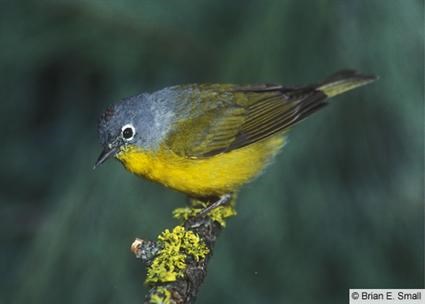
Image borrowed from allaboutbirds.org


Something Outstanding:
Well it's actually two somethings, two birds that were both new for our West Campus list and one that was a life bird for both Sue and myself.  I spotted a Sandhill Crane one day while returning from a lunchtime walk.  The crane was a flyby and fairly distant but still falls within our 'protocol' for what we put onto our list.  The second bird a Lark Sparrow, I first spotted it on my drive in and then Sue and I quickly turned around and went to relocate it.  This is a definitive life bird for me and a pseudo-life birds for Sue. Luckily we had some great looks at this one!

Lark Sparrow- super zoomed


Something Amazing:
It's a number 106.  That is the number of species that made it onto our year list this year.  When you look at the list to the right in this blog you can see that we have only seen 128 species in the four years we have been birding on campus and we saw 106 of those 128.  I would say that's a fantastic percentage.  If we could only spend more time outside and less time inside working I'm sure we could make that number even better.  ;-) 

Hope you all had a great 2012 of birding and we wish you all an even better year of birding for 2013!  It's not the numbers the count, it's the birds.

Tuesday, January 8, 2013

CBC WC Style 2012


Within the last few days of work before the end of the year I was battling a cold and the urge to get out and bird.  Birding won.  My first official National Audubon Christmas Bird Count was on Dec. 15th in New Haven.  As a little prep for it and to also see if any important birds on West Campus weren't found during the actual count day, I went out on the Friday before to do a mini-CBC here.


I'll just put the list in below but the end results were this.  Total bird numbers were down and total species (25) were down, likely do to the lack of berries and fruit out in the wild this winter.   Though there were some species lingering probably because of the warmer weather we have been experiencing.  It was a fun morning to get outside.  Here's the results. 


WC CBC-
Sharp-shinned Hawk (1)
Red-tailed Hawk (1)
Ring-billed Gull (2)
Herring Gull (8)
Rock Pigeon (9)
Mourning Dove (4)
Red-bellied Woodpecker (2)
Downy Woodpecker (3)
Northern Flicker (1)
Blue Jay (5)
American Crow (27)
Black-capped Chickadee (3)
White-breasted Nuthatch (3)
Carolina Wren (5)
Winter Wren (1)
Golden-crowned Kinglet (3)
American Robin (36)
Gray Catbird (1)
European Starling (6)
Cedar Waxwing (4)
Song Sparrow (3)
White-throated Sparrow (34)
Dark-eyed Junco (15)
Northern Cardinal (6)
American Goldfinch (5)


Nothing was outstanding although the Gray Catbird and Carolina Wren are good birds for this late in the season (at least it found some food).  Some interesting misses are the lack of Canada Geese on our grassy areas, House Finch, Fish Crow, and any exceptional winter finches.  It really would have been a good time to find a Common Redpoll, Red Crossbill, or White-winged Crossbill.  These three finches are irruptive during years of poor seed crops up north. 

"whitewash"- fecal evidence of an owl... no owl though :-(

Wednesday, January 2, 2013

Sometimes Noise Equals Quiet

From December 13th:  Yale West Campus (WC to some of us) is currently in the path of great change.  With an increase of human occupation on campus, there seems to be a decrease in bird occupation. Winter is always a less diverse time here on campus, even looking back at past years, we haven't had many species.  Now the total number of birds seems to be less, even common species are rarer on our usual drives and walks.  With an increase in human activity, it seems we're having a decrease in animal activity.

Anyway, here's the low down (and I mean low down) for species over the last couple of weeks.  This week will likely have similar results since I've been feeling under the weather. 

Bird List (in approximate increasing size order)
1. Black-capped Chickadee
2. American Goldfinch
3. Dark-eyed Junco
4. House Finch
5. House Sparrow
6. White-throated Sparrow
7. Fox Sparrow
8. Northern Cardinal
9. European Starling
10. Red-winged Blackbird
11. American Robin
12. Blue Jay
13. Common Grackle
14. Mourning Dove
15. Northern Flicker
16. Rock Pigeon
17. American Crow
18. Ring-billed Gull
19. Herring Gull
20. Red-tailed Hawk
21. Wild Turkey

I'm hoping to get out and do a little Christmas Bird Count here next week.  In case I do find something good we will be able to add it to the New Haven areas count if they don't find it in another spot. 

Wednesday, November 28, 2012

Thanksgiving Week

I'll make this post just like the week was SHORT and SWEET!  Only three days of birding but a decent total of 22 birds.  The feeders were fairly quiet for the week with only 7 species. 

The Wild Turkey says: "Happy Thanksgiving"

11/19 - 11/21: Northern Cardinal, Song Sparrow (f), White-throated Sparrow (f), Black-capped Chickadee (f), Blue Jay, Downy Woodpecker, Mourning Dove, American Crow, Rock Pigeon, European Starling, House Finch (f), American Goldfinch (f), Wild Turkey, Herring Gull, Ring-billed Gull, FOX SPARROW (f), American Robin, Dark-eyed Junco (f), Cedar Waxwing, Northern Mockingbird, Turkey Vulture, and Red-shouldered Hawk.    (f)= seen at the bird feeder

Northern Mockingbird

 We have a new mammal on campus, a Norway Rat.  The rat has also been enjoying the bird feeders but not for long.  Curious that with the addition of the rat, there has been a visible reduction of bird activity at the feeders.  Is it coincidence? 

Norway Rat

Darn you Squirrels!

11/12 - 11/16

Anyone who does NOT have a bird feeder knows that squirrels are cute little rodents, whose antics are entertaining to watch.  Anyone WITH bird feeders know that squirrels are the enemy in fuzzy pajamas.  I decided the other day to make my own bird feeder and see if the birds would like it. 


Feeder- post squirrel devastation
This feeder was created using a 20 oz soda bottle, a dead pen, part of a dunkin donut iced coffee cup, some picture wire, and a washer.  I used hot glue to hold some things in place and had a brand new homemade bird feeder.  Within an hour of being out a Black-capped Chickadee had already taken a seed.  The feeder lasted exactly one week.  The squirrels, surely mad that they couldn't sit on the feeder and enjoy the seed, decided to throw it on the ground and gnaw at the bottle to get to every last seed.  Time for another soda.


Of note, almost 50% of the birds seen last week on campus were seen on the feeders in the courtyard.  Either the only birds that are around are usign the feeder or I've been hiding from the cold.  Here is the moderate list of birds for the week, 21 in total.


Feeder Birds
1. White-throated Sparrow
2. Fox Sparrow (FOS- first of the season)
3. Dark-eyed Junco (huge casualties this week)
4. Downy Woodpecker
5. Northern Flicker (eating thistle?)
6. Black-capped Chickadee
7. Blue Jay
8. Mourning Dove
9. House Finch
10. American Goldfinch

Non-feeder Birds
1. Northern Cardinal
2. American Crow
3. Rock Pigeon
4. European Starling
5. Canada Goose
6. Wild Turkey
7. Herring Gull
8. American Robin
9. Red-tailed Hawk
10. Cedar Waxwing
11. Tree Sparrow (FOS)

Wednesday, November 14, 2012

Birds? What birds?

Tree felled by the storm.
Another week of busy-ness out here at West Campus and just some odd schedules.  The months ahead will be interesting as Sue might not be contributing to the WC blog but may have to do a post or two about things downtown.  I had an unplanned short birding session due to a fire alarm but it was chilly and started to snow so birds were scarce.  We did have a decent movement of raptors heading south earlier in the week but over all the week ended quiet.  The bird feeders are up and running (except for a stolen one), all our data is being recorded and added to the New Haven Bird Clubs winter feeder survey. 


Male sachem skipper- a new late date for the state of CT


OK So here are the birds... let's organize them by color this week. 

Grayish
Black-capped Chickadee
Rock Pigeon
Dark-eyed Junco
Blue-headed Vireo
White-breasted Nuthatch
Cooper's Hawk
Sharp-shinned Hawk

Blackish
Downy Woodpecker (ok they're black and white)
American Crow
Fish Crow
Brown-headed Cowbird
Common Grackle

Iridescent
Mourning Dove
European Starling
Wild Turkey

White or Yellow
American Goldfinch
Herring Gull
Ring-billed Gull
Cedar Waxwing
Eastern Phoebe

Reddish-brown or Brown with red
Song Sparrow
House Finch
American Robin
Red-tailed Hawk
Hermit Thrush
Red-shouldered Hawk
Purple Finch

Brown
White-throated Sparrow
House Sparrow
Canada Goose
Chipping Sparrow

Blue
Blue Jay

Cedar Waxwing- where is our Bohemian?


Of course these color categories are pretty arbitrary.  Most people might think of the Accipiters (Cooper's and Sharp-shinned Hawks) as brown and they are as young birds but at this point in migration the juveniles have mostly all moved through and the adults with grayish-blue backs are predominant.  Purple and House Finch females are really just brown and white.  Birds like Cedar Waxwings are filled with gradations and splashes of waxy colors.  Now that species are limited, it's time to pick out the little details.  Especially since by looking at the details we might find something really exciting. 

Monday, November 5, 2012

Between the last post and this one we've had an extreme weather event concurrent with an extremely focused work project, hence not a lot of good birding going on.  Hurricane Sandy closed Yale University for two days, with rain, high winds and the resultant power outages. Low-lying areas along the Connecticut shoreline were inundated with a salty and debris-strewn storm surge as the hurricane's effects lasted through two high tide cycles, and coincided with a nearly full moon.

Die-hard birders all staked out their favorite corner of shoreline, to watch for storm-tossed seabirds, and reported back to those of us who opted to hunker down indoors instead.  Yale graduate student Jake Musser (based at West Campus) shares his storm-birding experience here:

While hurricanes cause disruption in our lives, they also impact many animals.  In particular, pelagic birds – those that spend much of their lives on the open sea – can be displaced great distances and even entrained within the powerful cyclone.  On Tuesday, as the storm was calming down, I spent the day with a few birding friends on the coast observing thousands of storm-blown birds exiting the sound.  Our sightings included many shearwaters, jaegers, and storm-petrels, birds never typically seen in Long Island Sound.  Many of these species are currently migrating south along the open ocean and were displaced into the sound by the storm.  However, we also found a Sooty Tern.  The typical range of this tropical species extends only as close as the southern gulf stream (i.e. off the coast of the Carolinas).  The individual we observed likely got entrained within the cyclone for a very long distance.  Interestingly, this species is one classically known to get entrained within hurricanes as they seem unwilling to ever land, even when given the chance by a large piece of driftwood or the sight of land.
 
West Campus bird list for the two-week period between October 22nd and November 2nd.

Raptors:
Red-tailed Hawk and Red-shouldered Hawk
Osprey and Turkey Vulture
Coopers Hawk and American Kestrel

Corvids:
Common Raven and American Crow
Fish Crow and Blue Jay

Finchy things:
American Goldfinch and Pine Siskin
House Finch and Northern Cardinal

Sparrowy things:
Song Sparrow and White-throated Sparrow
White-crowned and Chipping Sparrows
Dark-eyed Junco and House Sparrow


More little birds:
Black-capped Chickadee and Eastern Phoebe
Golden-crowned and Ruby-crowned Kinglets
Brown Creeper and Winter Wren
Yellow-rumped Warbler and Northern Parula

Some non-passerines:
Mourning Dove and Rock Pigeon
Northern Flicker and Downy Woodpecker
Herring and Ring-billed Gulls
Killdeer and Canada Goose
Wild Turkey

And some more mid-sized birds:
American Robin and Hermit Thrush
Northern Mockingbird and Cedar Waxwing
European Starling and Red-winged Blackbird
Brown-headed Cowbird and Common Grackle
Scarlet Tanager

Friday, October 19, 2012

It's a bird, a plane.. It's a CRANE!

I'm going to start out with the excitement for the week.  A brand new bird for the West Campus list, a brand new bird for my state year list, and only my 2nd ever sighting of one in the state, a Sandhill Crane.  Sandhill Cranes are an amazing group of birds that are found in a few different areas in North America.  To be a bit more specific there are about 5 or 6 subspecies of the Sandhill Crane in North America, two are isolated year-round populations in the Southeast.  One isolated population is also found on Cuba.  The other two or three are distributed in northern Canada, Alaska (also barely into Siberia), and out West.  The interesting part is that they mostly use the Mississippi River as a flyway or further out west for migration, so they don't really come to Connecticut that often.  The state does get a few records every year and luckily I got to add another one. 

Sandhill Crane 'record' shot  (photo: Lynn Jones)


The above picture is pretty horrible but it's a better look than I almost got with my binoculars.  The important features that pinpoint to the ID as a crane (that no other birds have) are the long dangling legs (to the right of the body) and the outstretched neck (to the left of the body).  Any other similar-shaped bird would fly with it's neck tucked in (like a Great Egret or Great-blue Heron). 

Other excitement for the week was ANOTHER new species for the West Campus list, one we have been waiting for: Winter Wren.  I happened to see one crisply moving in a shrub right in front of the A-21 (Collections Center) entrance. We also finally cleaned out the American Kestrel nest box.  Sue and I had attempted to clean out the box in the spring only to find a live although unresponsive squirrel in residence.  Thinking that maybe she was on a litter of babies, we left her in place.  Well cleaning out the box it appears the squirrel had in fact been sick.  We found a lovely decayed/ mummified squirrel carcass, gross.


Lynn heading to clean out the box, proper tools required (photo: Sue Hochgraf)

I'm not happy the squirrel is dead but I am happy to evict it!  (photo: Sue Hochgraf)

Squirrel Mummy (photo: Lynn Jones)


 Other than that we had an impressive 51 species for the week thanks to the efforts of both Sue and her sister Karen who is visiting.  They both put in a little extra birding this week to really help push our numbers to another top 5 week of birding, and that was with a rainy Friday.  Congrats ladies and thanks! 


Sparrow-things:
Northern Cardinal
Eastern Towhee
Song Sparrow
White-throated Sparrow
Chipping Sparrow
White-crowned Sparrow
Field Sparrow
Savannah Sparrow
Dark-eyed Junco

Migrants:
Killdeer
Common Grackle
Eastern Phoebe
Cedar Waxwing
Blue Jay
Northern Flicker
Gray Catbird
Ruby-crowned Kinglet
Golden-crowned Kinglet
Yellow-rumped Warbler
Palm Warbler
Common Yellowthroat
Brown Creeper
Hermit Thrush
Swainson's Thrush
House Wren
Blue-headed Vireo
American Robin
Brown-headed Cowbird
American Kestrel
Merlin
Red-tailed Hawk
Sharp-shinned Hawk
Cooper's Hawk
Turkey Vulture
Black-capped Chickadee
Tufted Titmouse
Canada Goose
American Goldfinch

Other things:
Downy Woodpecker
Mourning Dove
Rock Pigeon
Northern Mockingbird
American Crow
Fish Crow
European Starling
House Sparrow
Wild Turkey
Herring Gull
Ring-billed Gull
Common Raven


Yellow-rumped Warbler (photo: Lynn Jones)


Friday, October 12, 2012

GREAT week for birding!!

Just some local color to start off the post.  Fruit of an ornamental crab with morning dewdrops.
Bird list for the week of October 8-12, 2012

Eastern Towhee
Song Sparrow
Swamp Sparrow
Field Sparrow
Chipping Sparrow
White-throated Sparrow
White-crowned Sparrow
Dark-eyed Junco
9. Savannah Sparrow

Black-capped Chickadee
Tufted Titmouse
Red-breasted Nuthatch
Brown Creeper
Ruby-crowned Kinglet
Golden-crowned Kinglet
Carolina Wren
17. House Wren

Eastern Phoebe
Gray Catbird
Northern Mockingbird
American Robin
Hermit Thrush
Yellow-rumped Warbler
Palm Warbler
Black-throated Blue Warbler
Black-and-white Warbler
27. Common Yellowthroat

Northern Cardinal
American Goldfinch
House Finch
Blue Jay
Common Raven
American Crow
34. Fish Crow

Killdeer
Canada Goose
Common Merganser - two males flew overhead this morning
Herring Gull
Ring-billed Gull
Red-tailed Hawk
Red-shouldered Hawk
Sharp-shinned Hawk
Cooper's Hawk
Merlin
45. Turkey Vulture

Wild Turkey 
Mourning Dove
Rock Pigeon
Northern Flicker
Downy Woodpecker
Red-bellied Woodpecker
Hairy Woodpecker
53. Yellow-bellied Sapsucker
A not-so-great movie from my ageing camera at full zoom, of a roving flock of grackles (mixed with starlings) in a West Campus parking lot one morning.  If you can stick with it to the end, you'll get to see the whole flock take off together - really pretty cool.
List continues:
European Starling
House Sparrow
Common Grackle
57. Brown-headed Cowbird

Wha???  Did somebody say we had fifty seven species of birds this week???
Sooo close to our previous record of 58 species in May
The third highest count (52) was just about a year ago, in September 2011.

Friday, October 5, 2012

Goodbye summer, hello autumn

Autumn reflections in the Oyster River at Yale West Campus. Photo by Karen Hochgraf
 Yep, we passed the autumnal equinox the weekend between this and my last post, so, goodbye summer it is.  With the sun rising later, I can say that I get to enjoy that moment of the day during my commute to work.  On the other hand, when I arrive back home in the late afternoon, there is less and less light for a bit of relaxing in the garden before darkness pushes me indoors.
This week there has been a full moon - beautifully bright, but flooding out the stars.  This time of year in the night sky (on the subject of goodbye, hello) we see the last of my favorite constellation, Cygnus the swan, winging through the Milky Way.  And if you're up late enough, you can greet Orion the hunter climbing up over the eastern horizon.
On the birding scene, it appears that this winter will be a good one for the "irruptive finches".  These finches generally stay north for the winter, but finding their preferred food scarce, have pushed southward for the cold season.  This week in Connecticut hundreds of Pine Siskins were reported, along with many Purple Finches and a few Evening Grosbeaks.  Here's a link to the birding blog, "10,000 Birds", which has a good page on this topic.  Corey, the host, has more time to research and write than I do, so enjoy his description of irrupting birds.
Um... all of that said, WE still don't have Pine Siskins - we'll just have to try harder next week!

American Pokeweed, Phytolacca americana. A great source of food for wildlife. Most Phytolacca are herbaceous like the one growing commonly at West Campus, but a few species, such as the OmbĂș (Phytolacca dioica) of Uruguay and Argentina grows to be a huge shade tree.
West Campus bird list for the two-week period between September 24th and October 5th (in which probably a grand total of one hour of actual birding was done) :

Departing birds:
American Redstart and Common Yellowthroat
Yellow-rumped Warbler
Ruby-throated Hummingbird
Blue-headed Vireo and Swainson's Thrush
American Kestrel and Bald Eagle
Ruby-crowned Kinglet and Golden-crowned Kinglet
House Wren and Eastern Phoebe
Common Grackle and Brown-headed Cowbird
Killdeer
Gray Catbird

Arriving birds:
White-throated Sparrow and Dark-eyed Junco
Seen more frequently this time of year:
Blue Jay and American Crow
Downy Woodpecker and Red-bellied Woodpecker
White-breasted Nuthatch and Carolina Wren

And the year-round crowd:
Northern Cardinal and Song Sparrow
Black-capped Chickadee
American Robin and European Starling
Northern Flicker
Mourning Dove and Rock Pigeon
Northern Mockingbird
Canada Goose and Herring Gull
House Finch and American Goldfinch
Red-tailed Hawk

thirty-eight species for our latest two-week period
Have a great weekend - and go birding!